
Home / CanSkate information
Learn to skate
CanSkate information
How Skate Canada’s learn-to-skate program works at Minto, the rules on the ice, and what to wear and bring.
Winter 2027 CanSkate registration is open
Fall skaters need to register again for winter, and classes fill quickly.
Early bird savings
Register before December 9 to get the early bird discount.
About CanSkate
CanSkate is Skate Canada’s flagship program and Canada’s only national learn-to-skate program. It’s designed for beginners of all ages and builds the basics for hockey, ringette, speed skating and figure skating.
Lessons are in groups, led by a coach certified by the National Coaching Certification Program (NCCP) with help from trained Program Assistants. There are never more than 10 skaters per coach.
What a session looks like
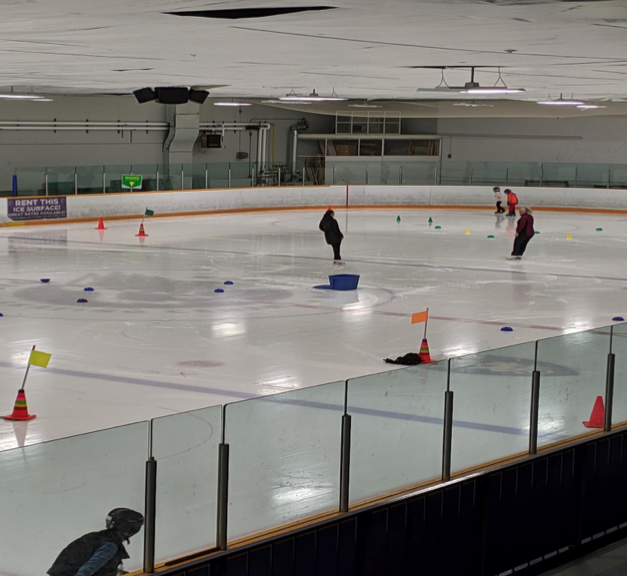
Sessions are busy and active. Skaters move between stations and circuits, with music playing and plenty to look at.
Stages, badges and ribbons
CanSkate has six stages, each with its own badge. Skills are grouped into three areas, the ABCs of skating, which every skating sport relies on.
- A
Agility
Jumps and turns
- B
Balance
Skating forwards
- C
Control
Skating backwards and stopping
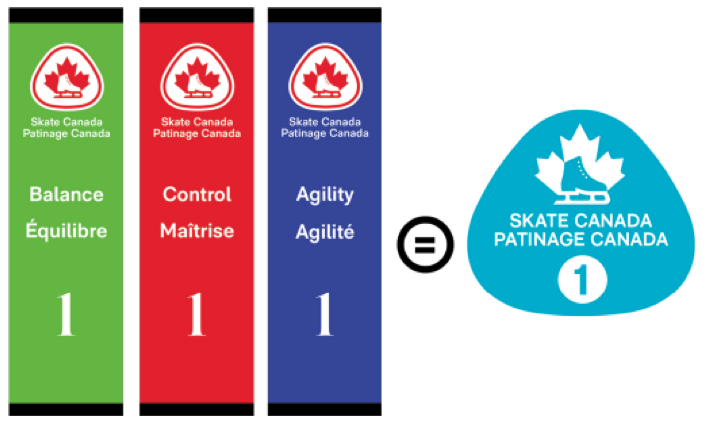
Skaters earn a ribbon in each area as they go. The three ribbons for a stage add up to that stage’s badge, so there’s always a next goal in sight.
-
Stages 1 to 3
Edges, turns and skating basics.
-
Stages 4 to 6
Skills for specific skating sports.
-
Skills get harder
Each skill starts simple, then skaters do it faster or with more difficulty. Skills come back at later stages with a higher standard.
-
Speed and flexibility
The Fast Track and speed drills build speed, and flexibility activities are part of every session.
Your first session
-
Pick up the name tag
Fasten it securely to your child’s outer layer. Please leave it at the rink: the coach removes the tags before the session ends.
-
Get ready
Use the assigned dressing rooms or the rink stands to put on skates and helmet.
-
Stay for the session
A parent or guardian must stay for the whole session. Skaters can only leave the ice if a parent or guardian is waiting at the door.
Rules on the ice
-
Every skater must
- Wear a CSA-approved hockey helmet
- Be registered with Skate Canada
- Wear skates: no one goes on the ice without them
-
Not allowed
- Food, drinks or gum on the ice
- Games the coach hasn’t set up, such as tag
- Horseplay: skaters will be asked to leave the ice
Skate Canada membership
Helmets
CSA hockey helmet required
Skate Canada requires every CanSkate skater to wear a CSA-approved hockey helmet. Bicycle, ski and snowboard helmets aren’t allowed, and skaters without the right helmet can’t go on the ice.
Fitting a helmet
-
Fit
Open the helmet to its largest setting, then size it down until it’s comfortably snug. The rim should sit one finger-width above the eyebrows, touching the top of the head.
-
Chin strap
Adjust the straps so they’re snug and lightly touch under the chin when fastened. This stops the helmet shifting.
-
Comfort
Helmets feel different even with the same foam lining. Try a few brands and pick the one that’s most comfortable.
-
No hats underneath
A hat can slide down over your child’s eyes, which is dangerous. A helmet that fits properly keeps them warm.
Skates
Buying and fitting skates
-
Start basic
Beginners don’t need top-of-the-line skates, but they do need good support and a good fit.
-
Where to shop
Try skate or sports shops. Specialty shops often have buy-back programs and lightly used skates.
-
Size down
Skates run large. Start a couple of sizes below shoe size, with normal socks (no extra pairs).
-
Lace all the way
Lace up to the top notch. A little room to grow is fine, but the fit should be fairly snug.
-
Walk in them
The heel shouldn’t lift and the toes shouldn’t have much wiggle room.
-
Try another brand
Brands fit different feet. If one doesn’t fit well, try another.
Tying skates
-
Toe to ankle
Snug, but not too tight.
-
At the ankle
Quite tight, to give the ankles the support they need.
-
Above the ankle
Fairly loose, so your child can bend easily. Bending is very important in skating.
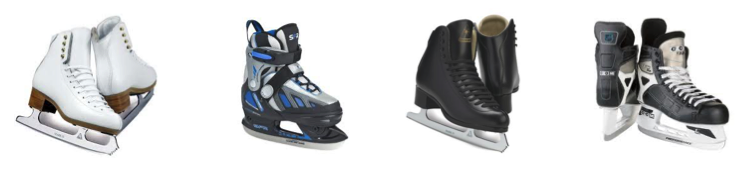
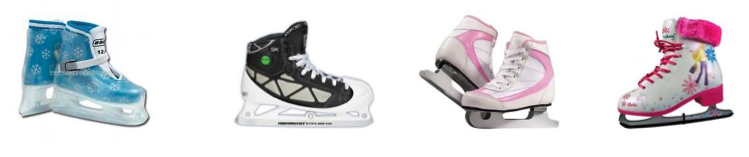
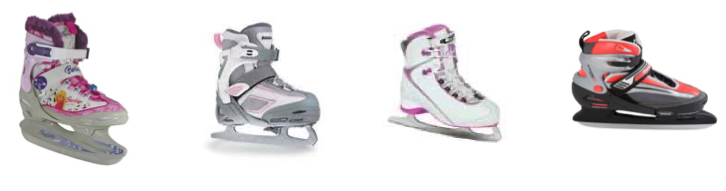
Skates for Stages 1 and 2
-
Suggested
-
Not suggested
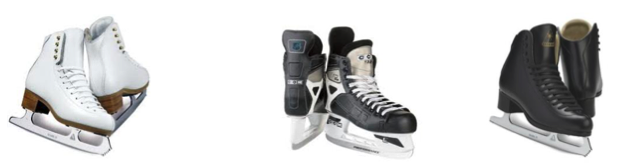
Skates for Stage 3 and up
-
Suggested
-
Not suggested
Sharpening
-
How often
About every 30 hours of skating, if the skates are well looked after.
-
Keep the toe picks
Don’t remove them. They help with balance, not just jumps.
Recommended sharpeners
-
380 Industrial Avenue · 613-731-4007
-
4235 Strandherd Drive, Unit 2 · 613-680-4800
813 Shefford Road · 613-825-9110
What to wear
Layers are the best way to keep your child warm on the ice.
-
Wear
- Mitts or gloves
- Splash pants
- Sweaters and vests
- Bomber-style jackets
- Long underwear or tights
- Knee pads, under the pants (over the pants they slide on the ice and make it hard to get up)
-
Don’t wear
- Scarves
- Jeans: they soak up water and get heavy and cold
- Long coats
- Ski pants or snowsuits
- Pants that flare at the bottom
Check pant length
Pant legs must not hang below the sole of the skate. Your child could trip and get hurt.
Stage 3 and up at Minto
Ready to skate?
Check the schedule, then register online.